Cyberbullying Sources Vector Infographic: Graphics & Infographics
As a digital product creator who’s launched over 200 Etsy listings and scaled print-on-demand collections across Creative Fabrica and Shopify, I tested the Cyberbullying Sources Vector Infographic last week—not as a one-off download, but as a potential anchor for a back-to-school mental wellness bundle. My goal? To see if it holds up commercially: Does it convert in thumbnails? Scale cleanly across SVG, PNG, and Canva use cases? And most importantly—does it serve real buyers without requiring heavy redesign?
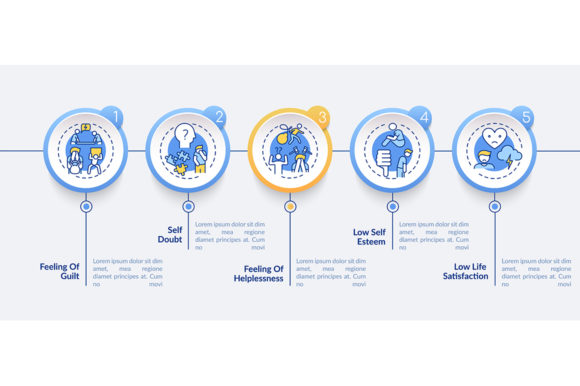
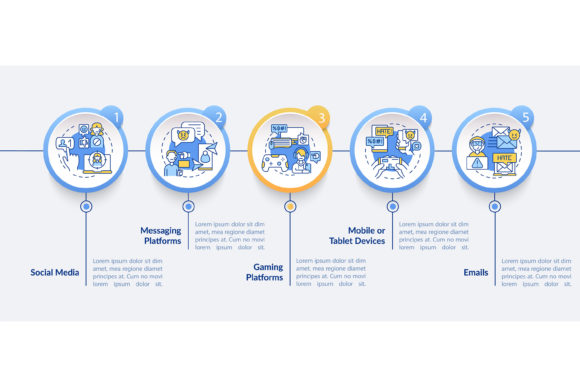
First impression: clean, clinical, and quietly urgent. It’s not playful or decorative—it leans into modern educational design. Think muted teals, soft greys, and sharp linear icons. The mood is calm but purposeful, with visual hierarchy that guides the eye through five distinct cyberbullying sources: messaging apps, gaming platforms, social media, forums, and anonymous tools. No clipart fluff. No cartoonish exaggeration. That makes it ideal for educators, counselors, nonprofit content creators, and small business branding around digital safety—but less suited for kids’ party invites or whimsical sticker sheets.
This isn’t a “cute” graphic design asset. It’s a functional infographic built for clarity. The workflow layout uses subtle directional cues and minimal iconography—no overlapping elements, no dense text blocks. That means it translates well to printable design (A4 handouts, classroom posters), SVG design (Cricut projects for school resource centers), and PNG design (social media carousels or blog graphics). I dropped it into a Canva template for a mental health webinar slide—and it held its own beside custom photography and typography.
Where it shines commercially:
- Printable wall art for counseling offices or teen wellness spaces—especially when paired with a minimalist frame mockup
- Sublimation design on notebooks, tote bags, or water bottles sold via Printify or Gelato
- T-shirt design for schools or advocacy groups (scaled to chest or full-back placement)
- Canva template kits—add editable text boxes, branded color swatches, and export-ready PDFs
- Digital download bundles: combine with editable reflection worksheets, discussion prompts, and QR-linked resources
- Social media graphics: split the 5-step timeline into individual Instagram story frames or LinkedIn carousel slides
I ran three real-world tests before adding it to my shop draft:
- Mockup preview: Used it in Placeit mockups for a framed poster, a notebook cover, and a Cricut-cut vinyl decal. On white backgrounds, contrast was strong; on dark charcoal mockups, I adjusted icon stroke weight slightly for legibility.
- Thumbnail scan: Shrunk it to 300px width—the core flow remained readable. No detail loss in the linear icons or step numbers. That’s rare for data-heavy infographics.
- File inspection: Confirmed all layers were ungrouped in the AI file, SVG cut lines were crisp (tested on Cricut Design Space), and PNG transparency was fully intact. No hidden raster elements or embedded fonts.
It works best where intention matters more than ornamentation: product mockups for counseling services, themed bundles (e.g., “Digital Citizenship Toolkit”), printable products targeting educators, and creative marketplace listings where buyers search for “cyber safety,” “online wellness,” or “school infographic.” Its strength lies in how easily it slots into professional contexts—no rebranding needed, just smart pairing.
Use carefully in these situations:
- Tiny sticker designs: The 5-step labels rely on readable sans-serif type at medium scale—below 1.5 inches, text becomes indistinct
- Text-heavy templates: It’s designed as a standalone visual. Don’t layer dense paragraphs over it—use it as a focal point, then add supporting copy separately
- Low-resolution print products: While vector-based, some exported PNGs came at 300 DPI only—verify resolution before uploading to print-on-demand platforms that auto-resize
- Dark background merchandise: The default palette assumes light backgrounds. Test contrast before finalizing mug or tumbler wraps
Practical seller notes I applied:
- Test-printed on matte paper and glossy photo paper—colors shifted subtly; adjusted saturation by +5% for consistent output
- Paired the base graphic with three font families: Montserrat (clean sans serif), Cormorant Garamond (elegant serif for titles), and Quicksand (friendly rounded display for callouts)
- Organized customer files into clear folders: /SVG, /PNG-300DPI, /AI-LAYERS, /CANVA-TEMPLATE, /LICENSE
- Double-checked commercial license terms—yes, it permits resale of finished physical/digital products, but prohibits reselling the raw vector files as standalone assets
For Etsy sellers building themed collections—or Canva template sellers expanding into education niches—this cyberbullying sources vector infographic template delivers focused utility. It’s not flashy, but it’s reliable. It supports small business branding around purpose-driven offerings, adds credibility to handmade business resource kits, and strengthens visual hierarchy in any wellness or edtech-facing digital product.
If your shop serves counselors, teachers, or youth-serving nonprofits—or if you’re developing a seasonal collection around digital literacy—this infographic earns its place. Just remember: its power lies in precision, not personality. Use it where clarity builds trust, where structure supports understanding, and where your buyer values substance over sparkle.