Liver Dysfunction Vector Graphic for Modern Branding
First Impressions and Brand Personality
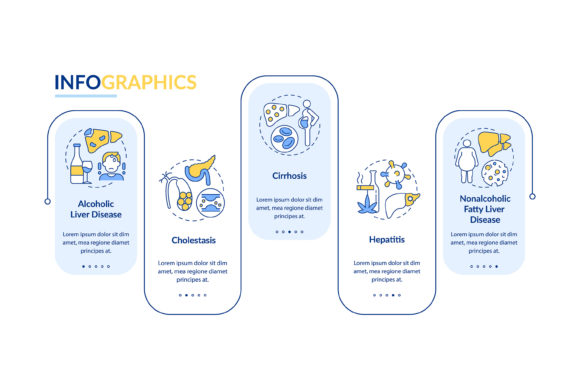
The Liver Dysfunction Vector Infographic immediately suggests a professional yet approachable tone. Its clean layout and structured data visualization give it a modern, informative feel that could suit a variety of local businesses. The use of linear icons and a clear five-step process makes it ideal for brands that value transparency and clarity in their messaging. It feels like a graphic design asset that can be adapted to both educational and commercial contexts.
Visual Language for Local Business Branding
This Liver Dysfunction Vector Infographic is more than just a visual tool—it's a storytelling device. Its workflow layout and timeline chart offer a natural way to communicate complex information in an easy-to-digest format. For small business owners looking to create a brand identity that’s both informative and visually engaging, this template can serve as a foundation for logo design, packaging design, or even social media graphics.
The infographic’s focus on alcoholic and nonalcoholic types also opens up opportunities for niche branding. A boutique store selling artisanal beverages or a skincare brand emphasizing liver health could easily incorporate this design into their product labels or promotional materials. The graphic’s ability to convey process and purpose aligns well with the needs of a handmade business or a creative marketplace vendor.
Practical Applications in Real Business Scenarios
The Liver Dysfunction Vector Infographic has strong potential for use across multiple touchpoints in a local business’s marketing strategy. From product labels to social media graphics, its versatility makes it a valuable addition to any designer’s toolkit. Here are some specific applications:
- Product Labels: Use the infographic as a subtle accent on product packaging, especially for items related to wellness, food, or beauty.
- Packaging Design: Incorporate the infographic into a hero graphic or decorative element on boxes, bags, or containers.
- Social Media Graphics: Repurpose the design elements for Instagram stories, Facebook posts, or Canva templates to promote seasonal campaigns.
- Marketing Visuals: Utilize the infographic’s structure for creating informational flyers, posters, or website banners that educate customers about your brand’s values.
- Printable Design: Ensure the design works well in both digital and print formats by testing its clarity at different sizes and resolutions.
Enhancing Brand Identity and Customer Trust
Using the Liver Dysfunction Vector Infographic in your brand identity can help build stronger customer trust. Its structured layout and clear visual hierarchy make it easier for customers to understand your offerings. This is especially important for businesses that rely on visual communication to convey their message—such as a food label or a home decor shop.
When integrated thoughtfully, this graphic design asset can support a cohesive brand identity. It helps reinforce consistency across all marketing visuals, from business cards to web design. The infographic’s emphasis on process and flow can also be used to highlight the craftsmanship behind your products, which is a powerful message for a handmade business or boutique store.
Where the Asset Works Best
The Liver Dysfunction Vector Infographic shines in areas where visual storytelling and clarity are key. It works best for:
- Seasonal Packaging: Add a festive touch to holiday-themed designs or limited-edition product lines.
- Boutique Visuals: Create a unique brand presence that stands out in a competitive market.
- Hero Graphics: Use it as a focal point on product mockups or promotional banners.
- Thank-You Cards: Incorporate the design into personalized thank-you notes or loyalty program materials.
- Editorial Design: Apply the infographic’s structure to content-heavy layouts such as blog posts or product descriptions.
Considerations for Careful Use
While the Liver Dysfunction Vector Infographic is versatile, it’s not suitable for every context. It should be used carefully in situations where:
- Formal Corporate Branding: The design may lack the sophistication needed for high-end luxury brands.
- Very Small Labels: The infographic’s details might be lost when scaled down.
- Crowded Product Packaging: Too much visual complexity could overwhelm the user experience.
- Ingredient-Heavy Layouts: The design may compete with essential text if not properly balanced.
- Low-Contrast Backgrounds: Ensure the infographic stands out clearly in all environments.
- Luxury Minimalist Brands: The design’s decorative elements may clash with a minimalist aesthetic.
Design Notes for Professional Use
As a brand designer, I recommend testing the Liver Dysfunction Vector Infographic in real-world scenarios before finalizing its use. Check how it performs on small labels, in black and white, and alongside different font styles. Ensure it maintains its clarity and impact when printed or displayed digitally.
Also, confirm that you have the appropriate commercial license for using the asset in client work or physical product sales. Review the PNG and SVG files for editability and transparency, and test the design against competitor packaging to ensure it remains unique and relevant.
Finally, consider how the infographic fits into your overall brand strategy. Whether you’re working on logo design, packaging design, or social media graphics, the Liver Dysfunction Vector Infographic can be a powerful tool when used with intention and care.