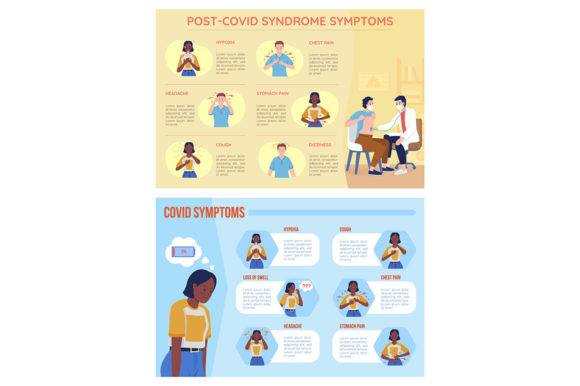
Covid Symptoms Infographic Template Set
A Designer’s First Look: Friendly, Clear—but Not Built for Stitching
Opening the Covid Symptoms Infographic Template Set, I felt immediate recognition—it’s a clean, approachable PPT-style layout with cartoon characters, soft color blocks, and labeled respiratory symptoms. Visually, it reads like a gentle public health reminder: warm but factual, simple but not childish. It’s clearly designed for screens or print—posters, slides, maybe even a clinic waiting room banner. But as an embroidery designer who’s stitched everything from baby onesies to boutique aprons, my first question wasn’t “Is it cute?” It was “How will this hold up under needle and thread?”
Where This Design Actually Belongs in Your Embroidery Workflow
This isn’t a machine embroidery design out of the box—it’s a graphics file meant for adaptation. Think of it as raw design assets, not a ready-to-hoop embroidery file. That distinction matters. I recently sketched a custom embroidered tote bag for a local wellness shop, and I considered adapting this set into a simplified symptom tracker patch. But after sketching it at 4” wide on cotton twill, I realized the cartoon faces and fine text labels would vanish under satin stitch density. The real fit? A printed tea towel label, a digital mockup for an Etsy listing, or a small-batch printable card set—not direct embroidery.
What Works (and What Doesn’t) on Real Fabric
Let’s be practical:
- Tote bags & sweatshirt embroidery: Only if you simplify drastically—swap cartoon icons for bold line-art versions, enlarge key text 300%, and remove overlapping elements. The original layout is too dense for fill stitch coverage without bleeding or puckering.
- Baby embroidery & nursery decor: Avoid the full set. Tiny lungs, thermometer icons, and multi-color symptom labels won’t translate cleanly onto onesies or crib blankets. You’d need to extract one symbol—say, a stylized cough icon—and redraw it as a low-stitch-count applique design.
- Embroidered patches & caps: Not viable as-is. Curved surfaces demand minimal detail and generous spacing. The current version has tight clusters of text and icons that would distort or fail registration on a cap hoop.
- Holiday gifts & personalized products: Better suited as a printed insert (e.g., tucked into a handmade herbal tea bundle) than stitched directly. Customers appreciate clarity—and a misread “fatigue” label due to fuzzy stitching undermines trust.
Design Choices That Help (or Hurt) Your Finished Product
The Covid Symptoms Infographic Template Set succeeds where many medical graphics fail: it avoids clinical coldness. The rounded characters and friendly palette support empathy—a real plus for wellness-focused craft businesses. But embroidery doesn’t interpret tone; it interprets contrast, scale, and separation. Those soft gradients? They’ll disappear in thread. That subtle icon shadow? Lost in satin stitch. And those tiny bullet points next to “fever” or “cough”? They’ll merge into a single blob unless manually reworked.
For Etsy sellers and small shop owners: this set adds value only if you’re comfortable editing vector files or collaborating with a digitizer. Used raw, it risks looking amateurish—not because it’s poorly designed, but because it wasn’t designed *for thread*.
Smart Prep Steps Before You Stitch (or Sell)
If you’re serious about using the Covid Symptoms Infographic Template Set in a handmade product or commercial embroidery project, do these five things first:
- Test the core concept on scrap fabric—print a 3” version, trace key shapes, and hand-stitch a quick sample to gauge readability.
- Check thread color contrast on both light and dark fabric backgrounds. What reads clearly on white may vanish on navy twill.
- Review stitch density: high-fill areas (like cartoon cheeks or symptom bars) can cause stiffness on baby clothes or stretchy tees.
- Confirm hoop size compatibility. Even a simplified version needs breathing room—don’t force it into a 3x3” hoop without trimming non-essential labels.
- Verify licensing. Since this is a Graphics file marketed for PPT and posters, double-check whether commercial use of derivative embroidery files is permitted—especially if you plan to sell finished products or digital embroidery files on Etsy.
A Thoughtful Fit—Not a Default Choice
This isn’t a bad design. It’s just honest about its purpose: visual communication for flat, static surfaces. As a designer who balances craft integrity with customer expectations, I appreciate when a resource knows its lane. The Covid Symptoms Infographic Template Set shines in printable mockups, boutique branding decks, or as reference for creating your own embroidery-safe symptom icons. But it shouldn’t be your go-to for sweatshirt embroidery, baby embroidery, or holiday embroidery without significant adaptation.
For craft business owners and Etsy sellers: lean into its strengths. Use it to build cohesive digital listings—pair it with clean photo mockups of your embroidered tea towels or wellness totes. Let it inform your color story or icon language. Just don’t mistake clarity on screen for clarity in stitch.
At its best, the Covid Symptoms Infographic Template Set is a thoughtful starting point—not a finished solution. And in handmade work, the most valuable designs are the ones that invite intention, not impulse.